


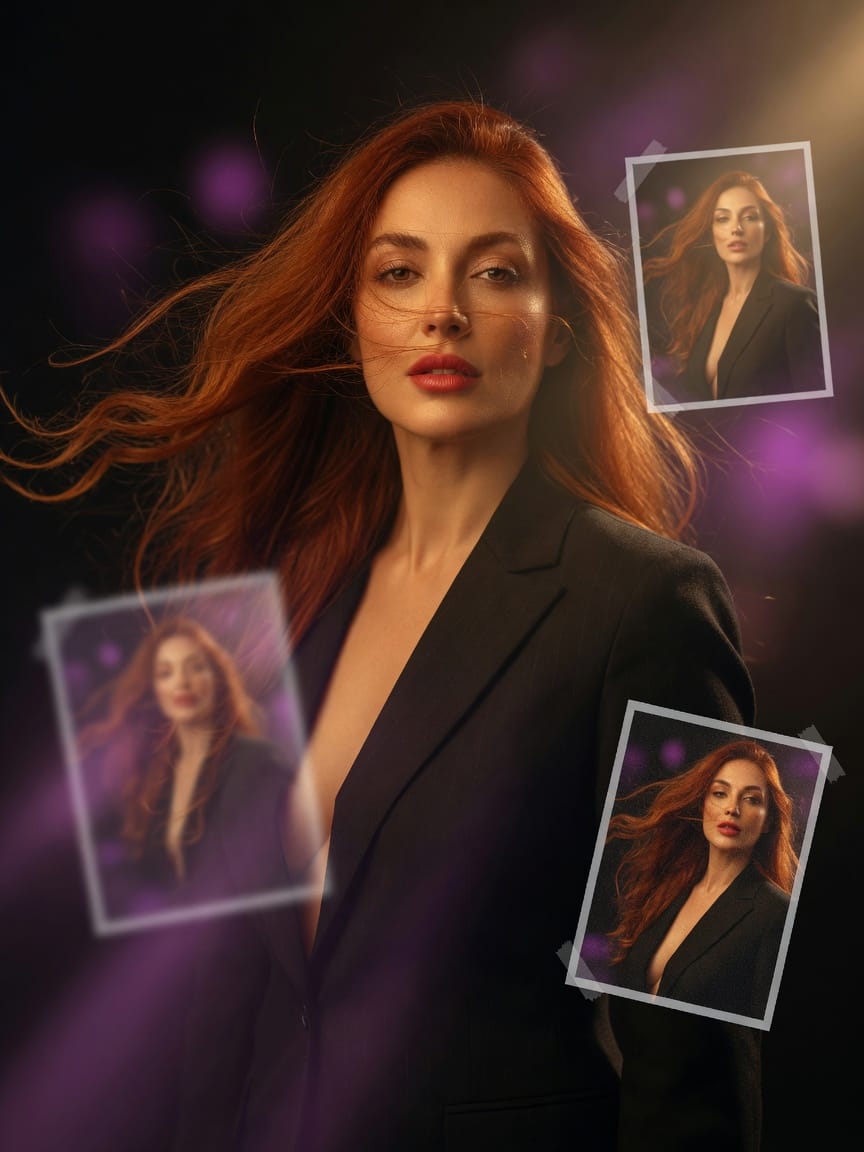
Watch someone use an AI image generator for the first time. They type two words, hit generate, frown, and hit generate again. And again. Somewhere around attempt fifteen they get something decent and call it luck.
It wasn't luck. It was variance. And variance is a terrible art director.
The users who get consistently stunning images on Lovescape work differently: they direct. Here's what that means in practice.
The reroll trap
Rerolling feels like progress because something new appears every time. But if you change nothing, you're not iterating, you're gambling: same distribution, new sample. Ten rerolls teach you nothing about why the image isn't what you imagined.
Direction starts where rerolling stops: change one thing, look at what moved, keep what worked. Generation is cheap; what's expensive is learning nothing from it.
Describe the scene, not just the girl
The weakest prompts describe a person. The strongest describe a moment: where she is, what the light is doing, what just happened. "Blonde, blue eyes, smiling" gives the engine a passport photo. "Caught mid-laugh in a dim kitchen, fridge light on her face, 2am" gives it a scene to build.
Your character already carries her look — that's what consistency is for. Spend your words on everything the look doesn't cover: place, light, mood, story.
Light is doing half the work
Two images of the same character, one flat-lit and one lit like a film still, don't even feel like the same platform. If you upgrade only one word in your prompts, make it a lighting word: golden hour, neon glow, candlelit, window light, backlit. Mood follows light. Every professional photo you've ever admired knew this; your generations should too.
Match the engine to the shot
Engines aren't interchangeable, and that's a feature. Photoreal engines reward grounded scenes and natural light; anime engines reward color, drama, and impossible angles. The same scene prompt shines on one and stumbles on the other. If you haven't picked your lane yet, start with realistic or anime, then learn what your engine loves.
Iterate like an editor, not a slot machine
The working loop is simple:
- Lock the scene first. Get the setting and pose right; ignore small flaws.
- Then tune one variable per generation. Light, angle, outfit, expression. One change, one lesson.
- Keep a private gallery of winners. Your best images are your style guide; steal from yourself.
- Stop at great. Perfection-chasing past a great image is how you end up with forty near-duplicates and no favorite.
Ten directed generations beat fifty rerolls, and they cost less. And when the still is exactly right, that's your storyboard: bring it to life in video.
The bottom line
Rerolling asks the engine to surprise you. Directing tells it what you want. Scene over description, light over everything, one change at a time, and a gallery of your own wins. The image you imagined is a few deliberate steps away — not a lucky number.
Stop gambling. Start directing.
You can start free.